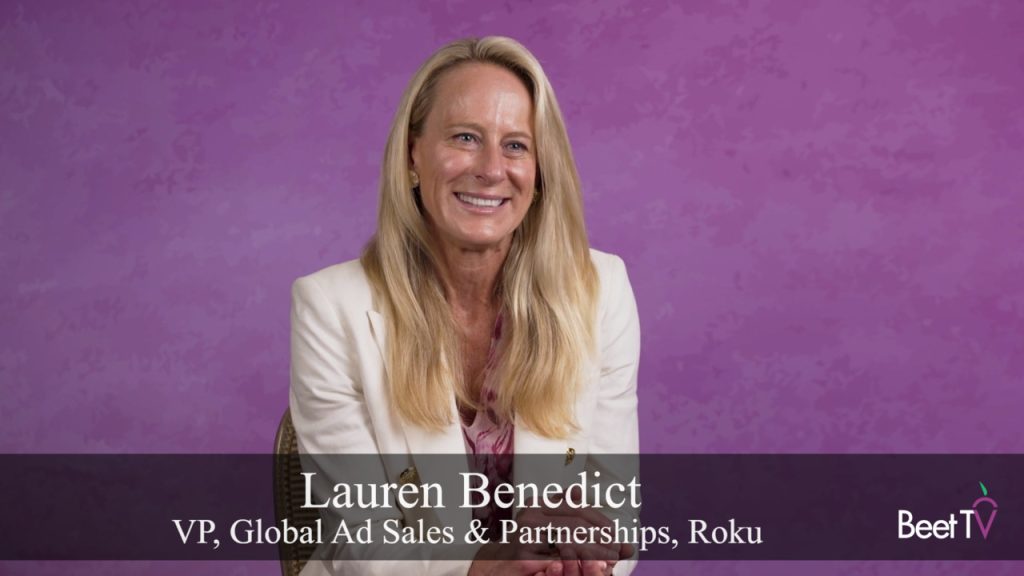
The roar of a Miami crowd still echoed, a distant hum against the focused intensity of the Possible conference. Lauren Benedict, VP of global ad sales and partnerships at Roku, leaned into the mic, her words painting a picture of a seismic shift already underway. Forget endless content scrolls and celebrity cameos for a moment; the real battleground in streaming, she argued, is the very first screen users see. And Roku? They’re positioning themselves as the undisputed concierge.
Look, it’s easy to get lost in the content churn. We all do it – spend 18 minutes scrolling, agonizing over what to watch next. But Roku’s strategy, Benedict explained, is about capturing that entire journey. It’s about the massive cultural moments that send shockwaves through social media, sure, but it’s also about the quiet, comforting habit of the Tuesday night binge-watch that nobody admits to.
This isn’t just some fluffy marketing spiel. Roku’s ad revenue is already surging, a 27% jump to nearly $613 million in Q1 tells a story. And the magic sauce, according to Benedict, is their data. We’re talking about 125 million people a day funneling through their interface. That’s not just eyeballs; that’s a deep well of deterministic signals, not some fuzzy statistical guess. It’s the difference between knowing someone might watch a cooking show and knowing they did.
Retail Media Crashes the Streaming Party
And then, like a caffeinated keynote speaker who just discovered APIs, retail media stormed the stage. Roku Curate is the embodiment of this convergence. Imagine Instacart, Best Buy, Kroger data mingling with Roku’s first-party intelligence. Benedict framed it as giving brands access to audiences with both precision and a clear line to business outcomes. Connected TV, it seems, is shedding its purely-awareness-machine skin and demanding credit for actual purchases.
The industry buzzword “full funnel” was everywhere at Possible, and Roku’s play is a direct response. They’re not just aiming to be the glamorous awareness builder; they want to be the performance engine, proving ROI with every impression. This is the alchemy marketers have been chasing – blending the art of brand storytelling with the undeniable rigor of performance measurement.
AI Arrives to Make Everybody a TV Producer
Of course, no tech discussion in 2026 is complete without a mandatory AI segment. But Benedict’s take felt less like science fiction and more like practical enablement. The real excitement, she said, is how AI is democratizing creative. Think about the local mattress store, whose previous TV spots might have resembled a hostage negotiation tape. Now, with Roku Ads Manager and partnerships like Spaceback, they can churn out surprisingly slick CTV ads using existing assets, optimized in real-time.
This isn’t just about better ads; it’s about efficiency and experimentation. AI can now test offers, gauge resonance, and tweak creative on the fly. It’s turning regional furniture chains into sophisticated performance marketers, blurring the lines between brand and direct response in ways we’ve only just begun to imagine.
“We’ve got a ton of data that we sit on at Roku,” she said, noting the company recently surpassed 100 million homes globally.
This isn’t just a data play; it’s a platform play. Roku’s vision for a modern TV buy breaks down into what Benedict calls the ‘one, two, threes.’ First, the Roku OS itself – the true ‘front door’ to consumer attention. Second, The Roku Channel, punching above its weight as the No. 2 ad-supported streaming platform by viewing time. And third, the entire ecosystem of data, identity, and interoperability that ties it all together.
The implications for the adtech industry are staggering. We’re witnessing a fundamental platform shift, where the gateway to the living room is no longer just about delivering content, but about understanding, influencing, and ultimately driving consumer behavior. Roku’s strategy feels less like a feature update and more like the unveiling of an entirely new operating system for television advertising.
Will This AI Improve Ad Creative Quality?
Absolutely. Roku’s use of AI in its Ads Manager and through partnerships like Spaceback is specifically designed to help businesses, especially smaller ones, create more polished and effective TV spots from existing assets. AI’s ability to optimize in real-time further enhances creative performance.
What Does ‘Deterministic Data’ Mean for CTV Ads?
Deterministic data means Roku uses confirmed signals from authenticated viewers, rather than statistical projections or estimations. For advertisers, this translates to higher confidence in audience targeting and measurement, moving away from the uncertainties of traditional TV measurement.
How Does Retail Media Fit into Roku’s Strategy?
Roku Curate integrates data from retail partners like Instacart and Kroger with Roku’s own first-party data. This allows brands to reach specific, high-intent audiences within the CTV environment and connect ad exposure directly to measurable business outcomes and purchases.