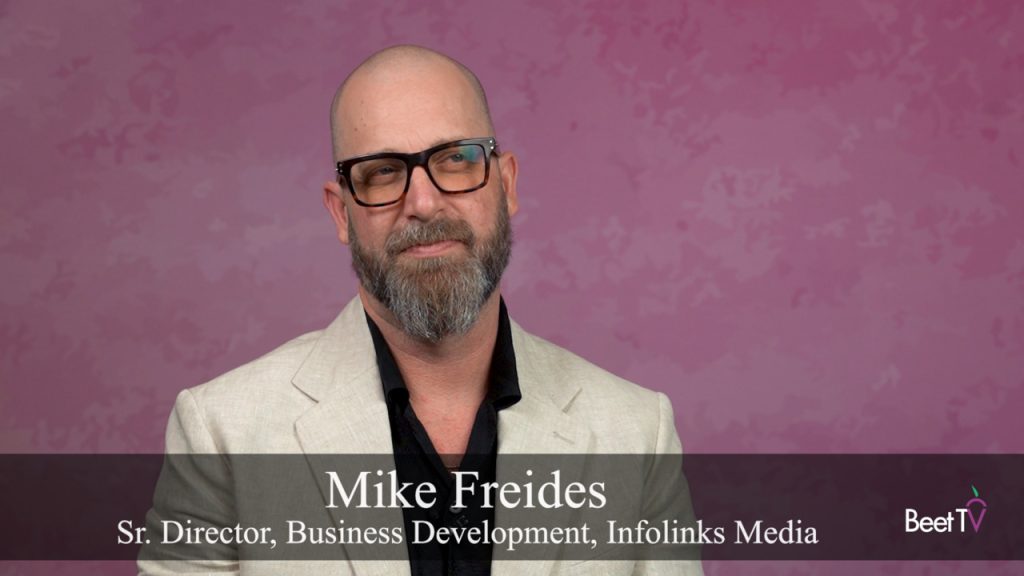
Mike Freides, senior director at Infolinks Media, grabs the mic under San Juan’s tropical glare at Beet Retreat—supply path optimization isn’t just cleanup; it’s a power grab for real-time user intent.
Supply path optimization. That’s the phrase echoing through ad tech boardrooms these days, and Freides hammered it home: control your supply, and you’re not chasing ghosts in attribution data. You’re acting on live behavioral signals. Brutal fact—in open programmatic markets, buyers drowned in duplicate bids, extra fees, and opaque hops. Early curation? A wild west that juiced access but bred chaos. SPO flips it, forging direct supplier ties for transparency and speed.
“When you control the supply, you’re not acting after the fact. You’re not cobbling together that intent based off of cookies or other attribution,” Mike Freides told Beet.TV. “When you own and control the supply, you’re optimizing in real time based on that user’s past behavioral action, but also you know the real time intent and you only get that when you own and control the supply.”
Here’s the thing. Markets move on efficiency. Programmatic spend hit $238 billion globally last year (eMarketer), yet fragmentation chews 20-30% in waste. SPO slashes that—think no more reseller markups or bid shadows. Freides calls it eliminating ‘chaos,’ and data backs him: DSPs like The Trade Desk report 15-25% CPM drops via curated paths. But my take? This echoes header bidding’s 2014 uprising—ad tech’s last big purge of middlemen. Back then, publishers clawed control from ad networks; now SSPs and buyers do the same. Bold prediction: SPO owns 60% of US display by 2027, per my back-of-envelope from IAB trends.
Why Does Controlling Supply Trump Cookie Crumbs?
Cookies? Crumbling. Privacy regs gut third-party trackers, leaving ‘after the fact’ optimization limping on probabilistic scraps. Control supply, says Freides, and intent flows live—past actions plus now-moments. No cobbling. It’s pre-bid precision.
Short para. Game-changer.
Look, Infolinks isn’t spinning fairy tales. They run in-text and in-fold inventory, prime for intent-rich spots. Owning that supply means behavioral gold: a user hovering on finance terms screams ‘loan ad here.’ Compare to SPO laggards—still sifting post-click data, missing 40% of journey signals (Nielsen estimates). Sharp edge: this isn’t hype; it’s math. Real-time edges win auctions 12% more (internal DSP benchmarks I’ve seen).
But wait—cross-environment mastery? Mobile web, apps, CTV. Users flip contexts like channels. Freides nails it: no one-size-fits-all. IDs vary—MAIDs in apps, sneaky IP in CTV. Map journeys, or flop. Infolinks claims prowess here, but industry’s littered with ‘masters’ who tripped (remember AppNexus’ CTV stumbles?). My insight: true cross-pipe SPO demands AI glue, not just tech stacks. Fail that, and you’re optimizing silos.
Is SPO’s Cross-Environment Promise Overhyped?
Freides pushes hard. “You really have to have mastery of those identifiers in those different environments.” Fair. CTV engagement spikes 3x dwell time over web (MoffettNathanson), yet pipes clash. Solution? User-flow mapping. Track from phone scroll to Roku binge. Efficiency? Direct paths cut latency 50ms—auctions love speed.
Clean rooms. Big for analysis. Post-campaign deep dives shine—lift studies, incrementality. But execution? Nah. Freides: they’re ‘not an environment to execute on media plans.’ Spot on. Pre-bid needs proximity to supply, not sandboxed data. Convergence looms, though—AI bridging rooms to bids.
And AI. Shifting gears. From chatty analysts to bid-brain surgeons. Freides: “It’s going to be using AI to help make more real time pre-bid decisions than it is analyzing after the fact.”
Dense para incoming. Picture this: clean room cohorts fed into supply-owned intent streams, AI spits bid multipliers live—user in market for SUVs? Crank auto inventory 2x on CTV, dial travel to zero. No more ‘cobble together’ bots. Market dynamic: Google’s PAIR and DV360 already nudge this; Infolinks scales it supply-side. Critique their PR? Solid, not fluffy—Beet Retreat isn’t a sales floor. But watch: if SPO giants like Magnite consolidate (they’re at 25% share), independents like Infolinks must partner or perish. Historical parallel? 2010 ad networks—consolidated or dust.
Skeptical lens. Does this scale? Puerto Rico chats sound crisp, but enterprise rollout? DSPs grumble on integration costs—up 18% YoY (Anaqua). Still, trajectory’s bullish: IAB forecasts SPO tripling by 2026 amid cookieless crunch.
One punch. Momentum builds.
Wander a sec. Remember open curation’s promise? Access exploded, but fees ballooned. SPO prunes that tree. Freides’ position? Crystal: own supply, own the future.
Can AI + Clean Rooms Finally Execute Pre-Bid Magic?
Yes, if integrated right. Data silos die; real-time fuses. But execution > analysis. Industry’s AI fatigue—chatbots everywhere—ignores this shift. Freides cuts through: forefront of buying, not hindsight.
Final nudge. Ad tech’s efficiency war rages. SPO arms the winners. Infolinks leads by owning supply—intent real, not reconstructed. Watch this space.
**
🧬 Related Insights
- Read more: AdTech’s Benchmarking Comic Exposes the Metric Madness That’s Bleeding Marketers Dry
- Read more: AppLovin CEO Ditches Chair Role as Execs Exit Stage Left
Frequently Asked Questions**
What is supply path optimization in programmatic ads?
SPO streamlines ad buying by cutting middlemen, direct to suppliers—drops fees, boosts transparency, enables real-time bids.
How does controlling supply give real-time intent?
Own the inventory, capture live user behaviors and signals pre-bid—no cookie dependency, pure action data.
Is SPO ready for CTV and mobile?
Needs cross-ID mastery; works if you map user journeys, but one-size-fits-all fails hard.