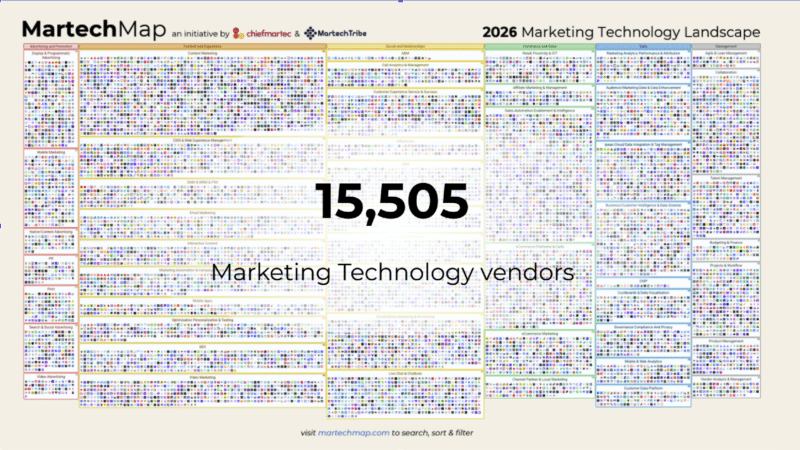
So, everyone expected AI to be the marketing panacea. A magic wand to boost productivity, churn out brilliant campaigns, and finally justify those bloated martech budgets. Instead, what we’re seeing is a growing pile of digital detritus – what Greg Kihlstrom at MarTech is calling “workslop.” It’s the low-quality, generic output that’s clogging up channels, a direct result of execs demanding AI integration without any real plan. Forty-nine percent of martech tools aren’t even being used, and a dismal 15% of companies are actually hitting their strategic goals with them. That’s not innovation; that’s just throwing money into the abyss.
Look, I’ve covered Silicon Valley long enough to know when I’m smelling desperation dressed up as progress. The narrative is always the same: a shiny new technology arrives, promising to revolutionize everything, and then… crickets. Or worse, a chaotic mess. This AI mandate, without any real guardrails or defined objectives from leadership, is forcing marketing teams into a corner. They’re under pressure to produce more, faster, using these AI tools, but with no guidance on how to do it well. The result? Mediocrity, amplified.
Who’s Actually Holding the Reins?
The problem, boiled down, is ownership. Or rather, the glaring lack of it. When the C-suite issues a directive to “use AI” without a roadmap, they absolve themselves of accountability. Suddenly, the messy execution falls on the marketing department, who are often treated as mere consumers of technology, not designers of it. IT worries about security, operations about efficiency – everyone’s got a piece of the puzzle, but nobody’s assembling it with marketing’s actual goals in mind. This isn’t just about having the latest chatbot; it’s about having a coherent strategy that, you know, actually works.
This brings us to the core issue: marketing departments are rarely in the driver’s seat when it comes to the tools they’re expected to wield. If a platform doesn’t perform, they’re usually left high and dry, unable to tweak, adjust, or fix it. Yet, they’re the ones expected to deliver results. It’s like being handed a toolbox full of broken hammers and told to build a skyscraper. The original article hits this nail on the head:
But even if marketers do receive a clear executive mandate, they still need to be in charge of decisions about how AI functions within their departments, even though they face many challenges.
The Marketer’s AI Mandate: Owning the Chaos
So, what’s a marketer to do when the directive comes down but the guidance is non-existent? The author suggests taking matters into their own hands. Instead of waiting for a grand strategy to descend from on high, marketing teams need to proactively define their own AI playbook. This isn’t about reinventing the wheel, but about ensuring the wheel they’re given actually rolls in the right direction.
It means digging into what’s already happening. An AI usage audit, they call it. Who’s using what, for what purpose, with what data, and at what cost? Before you scale up the AI-powered content farm, you need to know what seeds you’re currently sowing. It sounds painfully obvious, yet in the AI gold rush, logic often takes a backseat to sheer momentum.
Then there’s the “one-page marketing AI charter.” Think of it as your department’s mission statement for AI. It’s a blueprint, a talking point for the executive suite, a way to inject some sanity into the madness. It’s about setting clear boundaries too – drawing lines in the sand between what marketing owns and what IT, legal, or procurement handles. Ambiguity breeds workslop, and nobody needs more of that.
Starting a cross-functional AI working group also seems like a no-brainer, though one that’s surprisingly often overlooked. If everyone’s supposed to be using AI, shouldn’t everyone involved have a seat at the table? Templatizing operations, assigning clear roles – it’s basic project management, but applied to this new, fuzzy frontier. It’s about preventing silos and ensuring that when AI is implemented, it’s a team effort, not a departmental free-for-all.
Build, Buy, or Wait? The Marketer’s Dilemma
The “build, buy, wait” strategy offers a framework, but the key is that marketing must own its implementation. Otherwise, they’re just passive recipients of someone else’s potentially ill-suited plan. This is where the real transformation happens – or doesn’t. If marketers don’t actively shape their AI integration, they’ll just be handed a strategy that likely doesn’t align with their actual needs. And who’s making money then? Probably not the marketing team struggling with the fallout.
Ultimately, the piece argues that marketers can’t afford to be passive observers. They need to step up, own AI adoption, and forge a path with measurable outcomes. It’s about preventing the current slide into automated mediocrity and instead, building a truly smarter, more effective approach. The alternative? A whole lot of workslop. And frankly, that’s bad for everyone’s bottom line.
🧬 Related Insights
- Read more: First-Party Data Strategy: Building an Advertising Moat Without Cookies
- Read more: TV & Digital Converge: A New Era Dawns
Frequently Asked Questions
What is ‘workslop’ in marketing?
Workslop refers to the proliferation of low-quality, generic content and output that arises when AI tools are mandated without clear strategy or quality control, leading to increased volume but decreased effectiveness.
Should marketing departments wait for executive direction on AI?
No, the article strongly advises marketing departments to proactively take ownership of AI adoption, develop their own strategies, and present them to leadership, rather than passively waiting for unclear mandates.
How can marketing teams audit their current AI usage?
An AI usage audit involves inventorying who in the team is using AI, on which workflows, with what data, and at what budget, to understand current adoption levels before scaling up.