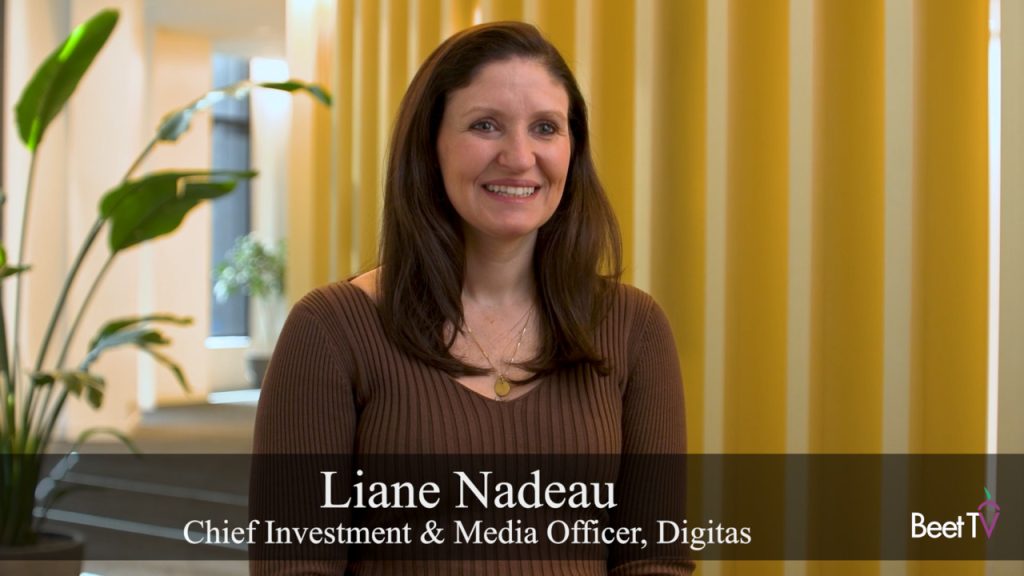
Liane Nadeau steps up at the IAB NewFronts, microphone in hand, and casually buries a decade-old ad industry grudge. Programmatic buying isn’t the villain anymore—it’s teaming up with direct publisher deals, all bowing to ad context as the real boss.
Zoom out. Publicis Groupe’s Digitas North America chief investment and media officer isn’t just chatting; she’s mapping a seismic shift in how brands chase eyeballs and dollars. We’ve seen this movie before—think cable TV’s rise humbling broadcast giants back in the ’80s. Programmatic flooded the market with cheap scale, but now it’s maturing, blending with premium environments to deliver what fragmented audiences actually reward: relevance.
And here’s my take, the one you won’t find in the transcripts: this isn’t evolution, it’s survival. Ignore context at your peril—AI crawlers are indexing publisher content faster than you can say ‘signal loss,’ turning trusted sites into discovery engines for LLMs. Digitas gets it; most agencies are still fumbling the script.
Why Programmatic Stopped Being the Bad Guy?
Nadeau nails it right away. “Historically, those two things would’ve been antithetical,” she told Beet.TV’s Lisa Granatstein. “You would’ve thought you’re either going to buy direct or programmatically.”
But no more. Programmatic’s superpowers—frequency capping, unified measurement—plug gaps in direct buys. It’s like adding nitro to a luxury sedan: direct gives the prestige plating, programmatic handles the heavy lifting. Marketers aren’t picking sides; they’re stacking them for hybrid firepower.
Look, data backs this. Programmatic’s share hit 82% of US display ad spend last year (IAB stats), yet premium direct deals grew 15% YoY. The overlap? Contextual targeting, where environment trumps cookies every time.
Ad Context: Buzzword or Business Imperative?
Context. It’s the word on every lip, rediscovered like vinyl in a streaming world.
“The thing that I would say matters the most is context,” she said, before breaking it into its essential parts. That includes reaching the right audience, placing ads alongside quality content and showing up at the right moment.
Nadeau’s not hyping fluff. Right audience in fitting content, timed perfectly—that’s the holy trinity driving lift. She critiques the programmatic past sharply: “As we start to buy more biddable and focus on audiences, we lost a little bit of the content along the way.”
Fair point. Audience targeting went rogue, stranding ads in content deserts. Now, publishers’ borrowed equity—think NYT’s trust halo—lifts brand perception 20-30% higher than mismatched placements (per recent GroupM studies). It’s math, not magic.
But here’s the skepticism: is this revival sustainable? Publishers are hiking CPMs 25% amid inventory wars. Brands better demand proof, or it’s back to the auction block.
Publisher direct? A comeback kid.
Nadeau calls it a “lost art” revived for good reason. Not just inventory—trust. “One of the things that you can only get from a publisher direct relationship is typically the borrowed equity of that brand,” she says.
It’s party math: arrive with a VIP intro, conversations flow. Premium alignments juice credibility, especially as consumers tune out 70% of digital noise (Nielsen). Programmatic layers on scale; direct supplies the soul.
Measurement: The Great Humbler
Everyone’s equal under the analytics microscope. Nadeau’s blunt: “We’re holding publisher partnerships just as accountable as we are our social, our programmatic, even our search.”
No free rides for fancy custom programs. Success? Client-specific, category-driven. CPG wants sales lift; auto craves consideration. Real-time signals—engagement, view-through—guide tactics, but marketing mix models tie to revenue.
“What are the optimization metrics that we can see in real time?” she asks. Then the kicker: connect upper-funnel fluff to bottom-line wins. Impressions? Cute. Revenue? King.
My bold call: expect 2025 holdouts to fold. Agencies ignoring MMM will bleed 10-15% efficiency as clients arm with clean-room data. Digitas is ahead; the rest, play catch-up.
Humans vs. Machines: The New Ad Duel
Twist. Marketers aren’t just wooing people—they’re pitching algorithms. “We’re not just speaking to people anymore, we’re also speaking to LLMs,” Nadeau warns.
Publisher partnerships boost AI visibility. Subtle stories? They shine in summaries. Bland blasts? Buried.
This echoes search’s early days—optimize for Google, win traffic. Now, contextual havens feed LLMs premium signals, future-proofing campaigns. Ignore it, and your ad’s DOA in the inference era.
Short version: context wins wars.
Outcomes demand proof. Nadeau’s playbook: real-time tweaks plus hindsight modeling. “Tying that upper funnel, mid-funnel down to brand outcomes in the end is what’s vital.”
Data-driven? Absolutely. But agencies must ditch vanity metrics—it’s outcomes or bust.
🧬 Related Insights
- Read more: AdTech’s Benchmarking Comic Exposes the Metric Madness That’s Bleeding Marketers Dry
- Read more: AppLovin CEO Ditches Chair Role as Execs Exit Stage Left
Frequently Asked Questions
What is ad context and why does it matter now?
Ad context means placing ads in relevant, quality environments matching audience mindset. It outperforms audience targeting post-cookies, boosting engagement 2x and trust via publisher equity.
Is programmatic buying replacing direct publisher deals?
No— they’re merging. Programmatic adds scale and control to direct’s premium access, with context gluing it together for better outcomes.
How do you measure programmatic and direct success?
Real-time metrics like frequency and engagement, plus MMM linking to sales. Hold all channels accountable—no exceptions.