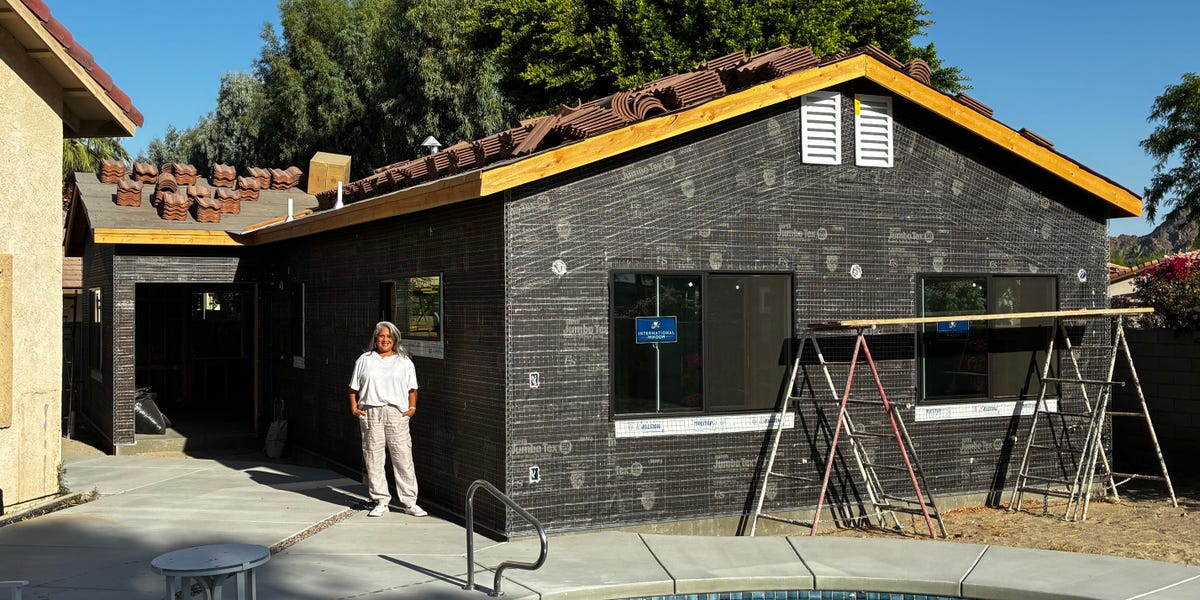
The concrete pour was yesterday. Shalini Karnani Bonjour, a Sotheby’s International Realty agent, isn’t just selling homes these days; she’s overseeing the construction of one – right in her own backyard. This isn’t some quaint garden shed. This is an 1,100-square-foot, two-bedroom, two-bathroom dwelling, complete with a walk-in tub, a full kitchen, and laundry facilities. It’s a proof to a seismic shift: the burgeoning accessory dwelling unit (ADU) movement, a response to a complex web of aging populations, sky-high housing costs, and a profound desire for aging in place with autonomy.
Her mother, suddenly alone after 20 years in a spacious Michigan home following her husband’s passing, wasn’t keen on the traditional routes. Assisted living? Independent living communities? All felt like a forced abdication of independence for her 78-year-old mom. “She was already making a major emotional adjustment by downsizing from the home she had known for so many years, and asking her to completely change her lifestyle didn’t feel right,” Karnani Bonjour explains.
This impulse isn’t unique. It’s a growing wave, driven by families grappling with the same dilemma: how to provide care and proximity without sacrificing the autonomy of aging parents. The initial price tag for this custom-built independence? A staggering $475,000, a figure that underscores the significant investment and commitment involved. It’s a stark contrast to the often-cited, though frequently underestimated, costs of long-term care facilities. This isn’t just about building a guest house; it’s about crafting a self-sufficient, age-appropriate living space.
The Hidden Architecture of Aging in Place
What’s truly fascinating here is the architectural and regulatory undercurrent. ADUs, often dismissed as granny flats or casitas, are becoming a sophisticated solution. They represent a de facto decentralization of elder care, shifting the burden from institutional providers to the existing housing stock and, crucially, to family. Cities are increasingly recognizing this, loosening zoning laws that once restricted such secondary units. It’s a pragmatic pivot, acknowledging that the single-family zoning paradigm, established decades ago for a vastly different demographic and economic reality, is no longer tenable.
Karnani Bonjour’s journey highlights the bureaucratic labyrinth. “We finally broke ground on the ADU in March 2025. Initially, we hoped the project would take about six months, but it has taken much longer. Right now, we’re waiting on solar permits before construction can continue.” This isn’t a simple renovation; it’s a multi-jurisdictional puzzle involving city permits, homeowner association approvals, and navigating the complex dance of construction timelines, all while managing the emotional toll of a mother’s significant life transition.
This is where the ‘how’ and ‘why’ become critically important. The ‘why’ is emotional: love, familial duty, and a desire for a parent’s comfort and dignity. The ‘how’ involves a complex interplay of urban planning, construction logistics, and a deep understanding of local ordinances – a domain Karnani Bonjour, as a real estate agent, is uniquely positioned to navigate. She interviewed at least ten builders, a process that she admits is far from easy, emphasizing the trust factor inherent in such a monumental project.
I know it will be rewarding in the end, but if I weren’t a Realtor, didn’t feel comfortable talking to builders, and didn’t know how to have these conversations with the HOA, this would feel like an impossible task.
This sentiment is echoed across countless similar projects. The perceived simplicity of building a small structure belies the underlying complexity. It requires not just capital, but also a significant investment of time, expertise, and emotional resilience.
Is This the Future of Independent Living?
The ADU movement, while gaining traction, is still met with its share of challenges. Affordability remains a major hurdle, even with the potential long-term savings compared to institutional care. The permitting process, as Karnani Bonjour notes, can be a glacial crawl. And then there’s the delicate art of cohabitation. Her mother is currently living in a bedroom within their main house, a temporary arrangement that’s already highlighting the nuances of shared living. “My mom loves to cook, so having her own kitchen will be really important to her,” she shares, a seemingly minor detail that speaks volumes about maintaining personal identity and routine.
This isn’t a story about a Realtor building a side hustle; it’s about a daughter responding to a profound life event with an innovative, albeit costly, solution. It’s a practical manifestation of modern family dynamics, where proximity and independence aren’t mutually exclusive. As the cost of traditional senior living continues to climb and societal attitudes shift towards supporting aging in place, expect to see more of these backyard homes pop up. They’re not just structures; they’re carefully constructed havens of autonomy.
The ADU trend, when viewed through a wider lens, represents an architectural response to demographic change. It’s a decentralized model that could reshape suburban landscapes and redefine the concept of ‘family home’ for generations to come. It’s a quiet, but undeniable, architectural shift.
🧬 Related Insights
- Read more: Metadata Is AI Marketing’s Unsung Hero
- Read more: AI Use Soars, Fatigue Mounts
Frequently Asked Questions
What exactly is an accessory dwelling unit (ADU)?
An ADU is a secondary housing unit on a single-family residential lot. It can be attached or detached from the main house and has its own kitchen, bathroom, and living space. They’re often referred to as granny flats, in-law suites, or casitas.
Is building an ADU expensive?
Yes, building an ADU can be very expensive. Costs vary widely based on size, location, materials, and labor, but as demonstrated in this case, can easily reach hundreds of thousands of dollars, comparable to building a small home.
Will ADUs replace assisted living facilities?
ADUs are unlikely to completely replace assisted living facilities, as those offer specialized medical care and support services. However, they provide a compelling alternative for individuals who prioritize independence and can manage their daily living with family support nearby, potentially reducing the need for more intensive care settings. This essay is based on a conversation with Shalini Karnani Bonjour. It has been edited for length and clarity.