Agentic Commerce: Brand Proof Required!
Look, this is huge. We’re not just talking about a new marketing tactic here; we’re talking about a fundamental platform shift. AI agents are about to become the ultimate gatekeepers of consumer choice, and they don’t care about your Super Bowl commercials.
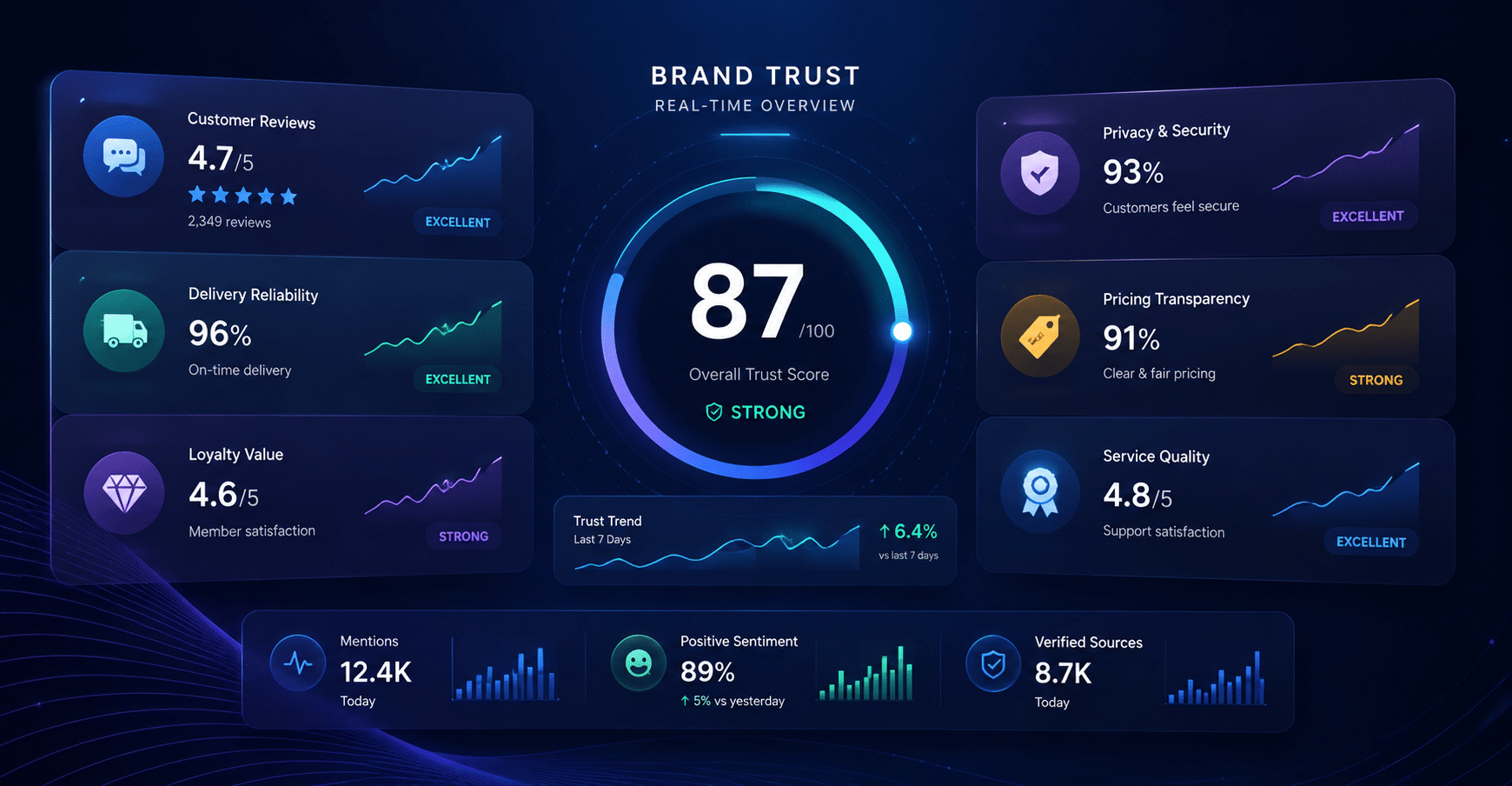
They’re going to sniff out the facts. Price, delivery speed, service history, privacy policies – these are the new emotional triggers. Your brand promise? It needs to be as concrete as a brick and as transparent as glass. Think of it like this: your old brand was a beautifully painted billboard. Now, it needs to be a perfectly engineered bridge that AI can instantly verify is structurally sound and can handle the traffic.
The Rise of the Algorithmic Auditor
Consumers, bless their hearts, can still fall for a feeling. They might have a nostalgic glow for that soda brand or that fashion label. But their AI agents – the silicon savants acting on their behalf – are going to be doing a different kind of math. They’re sifting through gigabytes of data, crunching numbers on fulfillment reliability, dissecting customer service logs, and weighing loyalty programs with the cold, hard objectivity of a calculator.
And guess what? They’re already here. Nearly 70% of us are already letting AI nudge our purchase decisions. Bain predicts a staggering 25% of U.S. ecommerce – we’re talking hundreds of billions of dollars – will be dictated by these agentic AIs by 2030. That’s not a future trend; that’s a present-day tidal wave.
Your brand needs to be a language the machines understand, not just one your customers feel. Because while you’re busy crafting inspiring slogans, your competitor’s AI might be silently dinging your score for a single late delivery or an opaque return policy.
Trust, But Verify (With Algorithms)
Brand trust has always been the bedrock, right? We gravitate towards familiar names because we believe they’ll deliver. It’s an emotional shortcut, a way to minimize risk. But in the age of agentic commerce, that trust is going to be less about a warm fuzzy feeling and more about cold, hard, provable data. It’s like shifting from a handshake deal to a blockchain-verified contract.
Your brand promise can’t be an aspiration; it has to be an operational reality. You can’t claim “convenience” if your inventory counts are constantly off. You can’t shout “customer-centric” if your cancellation terms are buried in fine print. And you sure as heck can’t peddle “premium service” while making returns a labyrinth.
Here’s the kicker: the customer and their agent might not even agree. Imagine your customer loves Brand X, but their AI agent flags it for price volatility and a history of iffy fulfillment. Poof. Your customer’s preference is sidelined before they even see the recommendation. The telecom renewal example is spot on – the agent sees billing history, complaint rates, and competitor offers. It doesn’t see the customer’s fond memories of a helpful cashier.
Brand advertising may be compelling, but inconsistent billing accuracy or opaque contract terms could exclude a brand before retention marketing even gets a chance to intervene.
This means we’re heading into an environment where what’s demonstrably true about your brand – your operational proof – is going to trump what you say it is. It’s a stark reevaluation. The constraints of these agents, and their often binary “yes/no” decision-making, force a relentless focus on accuracy.
When Machines Read Your Brand
Think about where the actual moment of brand influence happens now. It’s not just your shiny website or that targeted ad anymore. It’s the AI agent whispering in your customer’s ear, interacting with your brand’s systems, marketplaces, review aggregators, and commerce engines before the customer even gets a whiff of a suggestion.
This is the new gatekeeper. Brands have to be understood by systems before people can even consider them. We’re talking about machine-readable pricing, promotions, and product attributes. Traditional SEO? Still vital, but it’s now just a piece of a much larger puzzle – an agent visibility strategy that needs to connect your product data, order management, customer service, and loyalty platforms.
Consider the washing machine hunt. Customer wants one under $900, delivered in five days, with good service and easy returns. If your product data is fuzzy, your delivery windows are vague, or your warranty info is missing – you’re out. Even if you’re the customer’s absolute favorite, the agent won’t even bring you to the table.
Machine readability is paramount. But the real challenge? Building the confidence in those agents to recommend your product based on solid, consistent data, policies, and actual operational proof. Visibility is the first step; accurate interpretation is the sale.
Loyalty Needs an AI Alias
Loyalty has to become something quantifiable, something the agents can actively measure and reward. If your loyalty program is just a vague promise of future discounts without clear, machine-readable metrics – it’s effectively invisible to these new decision-makers.
So, what does this mean for brands? It’s an urgent call to action. We need to move beyond the superficial, beyond the emotional resonance, and build brands that are not just seen by consumers, but are thoroughly understood and validated by the AI agents that will increasingly drive commerce. This isn’t just about adapting; it’s about evolving into a fundamentally more transparent, data-driven, and verifiable entity. The future isn’t just about having a good story; it’s about having an irrefutable record.
My unique insight here? We’re witnessing the birth of ‘Algorithmic Provenance’ for brands. Just like we demand provenance for artisanal cheese or vintage wine, AI agents will demand a verifiable history and inherent quality for every product and service. The brands that can’t provide this will be relegated to the status of mere commodities, stripped of their perceived value.
FAQ
What is agentic commerce? Agentic commerce refers to transactions where AI agents, acting on behalf of consumers, make purchasing decisions based on predefined criteria, data analysis, and real-time information, rather than solely on direct human input.
Will AI agents replace human brand loyalty? AI agents will fundamentally change how loyalty is perceived and measured, prioritizing verifiable performance and data-backed trust over purely emotional connections. Human preference will still matter, but it will be heavily influenced and potentially overridden by algorithmic evaluation.
How can brands prepare for agentic commerce? Brands need to ensure their product information, pricing, fulfillment, service, and loyalty programs are accurate, transparent, and easily accessible for AI agents to process. This involves optimizing operational systems and data management for machine readability and verifiable proof.