The sterile gleam of the London hospital room faded, replaced by the crisp, cool air of a city teeming with history. John Adams, a man who’d spent his life engineering solutions, found himself on the receiving end of one.
It’s a neat, almost poetic symmetry, isn’t it? John Adams, an electrical engineer who co-founded Shockwave Medical, the company that commercialized intravascular lithotripsy (IVL)—a groundbreaking technology using sonic pressure waves to shatter calcified plaque in arteries—ended up being one of its first high-profile patients. He’d first tinkered with the concept in 2007, alongside his partner Daniel Hawkins, aiming to clear blockages so stents could be placed. Fast forward to 2019, years after a quintuple bypass surgery in 2010, and Adams was experiencing that familiar chest tightness again. Heavily calcified arteries, a stark reminder of the very problem he’d dedicated years to solving.
His reaction, however, wasn’t one of despair, but of proactive engagement. “Males, we like to ignore symptoms,” he told Business Insider, a wry observation that rings true for many. But Adams, steeped in the cardiology business, recognized the signs. He didn’t wait. The catch? IVL wasn’t FDA-approved in the US yet. So, he hopped on a plane to London.
He arrived “in bad shape,” he recalled, moving slowly, often breathless. The contrast two days later was stark. He felt so much better, tourist mode engaged, ready to scale the 200-plus steps of the Tower of London with his wife.
Later, the procedure was replicated in his left coronary artery in the US, following FDA approval in 2021. Now, feeling “fully back to normal,” Adams is living an exceptionally active life, a far cry from what one might expect from someone his age, or even from someone who’d faced significant cardiac challenges.
Beyond the life-saving tech he helped pioneer, Adams attributes his vitality to a trio of habits that deliberately sidestep the conventional.
Staying Active Without the Gym
Forget treadmills and weight machines. Adams’s approach to fitness is integrated into his very being. “I’m just a very active person,” he states plainly. “I don’t like to sit around, so I’m always on my feet.” This isn’t a recent development; he’s been racing boats since he was sixteen, a passion he continues with his family today, alongside jet-skiing and extensive dog-walking. His hands-on engineering past bleeds into his present—he’s built two planes, and recently, feeling remarkably spry, decided to get back into flying. He’s currently re-certifying, a proof to his enduring drive and a clear motive to keep going.
This continuous engagement with complex, physical, and mental challenges—building planes, racing boats, learning to fly again—is a powerful counter-narrative to the idea that retirement means slowing down. It’s about sustained effort and the pursuit of new skills, rather than passive consumption.
Fueling the Mind in Retirement
Retirement can be a mental desert for many, a void where the daily grind is replaced by… well, often not much. Adams, however, thrives on it. His home is a constant project space. “We have a machine shop here at my house, and half the time I’m out there with my sons,” he explains. Whether it’s fixing something around the house or diving deep into boat mechanics with his sons, creating motors from scratch, his hands and mind are perpetually engaged. This isn’t just a hobby; it’s a commitment to lifelong learning and problem-solving, the very essence of his engineering roots.
Is this constant tinkering a form of preventative maintenance for the brain, akin to his medical interventions for his heart? It certainly feels that way. The cognitive load of understanding complex machinery, troubleshooting issues, and collaborating on complex projects likely offers a potent neurochemical workout.
Family: The Ultimate Motivator
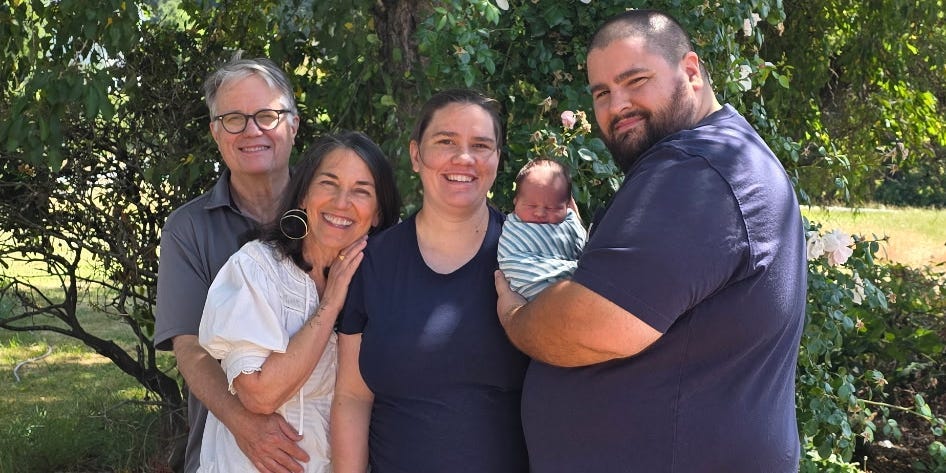
And then there’s the bedrock: family. Adams emphasizes the crucial role of close relationships in longevity. “My boys are here almost every day doing something in the garage.” This isn’t just proximity; it’s shared purpose. Both sons are also pursuing their pilot’s licenses, mirroring their father’s passion and creating a tangible reason for continued connection and activity. “I mean, it gives you a motive to keep on going, right?” he muses, and it’s a question that resonates deeply. The social and emotional bonds, coupled with shared goals, provide a powerful impetus for health and continued engagement with life.
Adams’s story isn’t just about surviving a serious health condition; it’s about thriving afterward, by actively rejecting the sedentary narrative often associated with aging and medical intervention. His lifestyle suggests that true longevity isn’t found in prescribed routines, but in the continuous application of curiosity, a hands-on approach to life’s challenges, and the unwavering support of loved ones.
Is This the Future of Aging? A New Architectural Shift?
Adams’s life isn’t just an anecdote; it hints at a broader architectural shift in how we perceive and pursue longevity. For decades, the dominant paradigm has been reactive: address illness when it strikes, then manage it with medication and rest. Adams, however, represents a more integrated, proactive model. His physical activity isn’t a chore, but a byproduct of his passions—flying, boating, tinkering. His mental acuity is sharpened by perpetual engagement with complex, hands-on tasks. And his social connections are not just pleasantries but the very engine of his motivation. This isn’t about extending life at all costs; it’s about enriching life in such a way that a longer lifespan becomes a desirable outcome, not a burden.
This approach fundamentally challenges the traditional medical-industrial complex’s focus on disease management. Instead, it prioritizes a holistic integration of physical, mental, and social well-being, driven by intrinsic motivation and lifelong learning. It’s a model that assumes agency, creativity, and purpose are not optional extras in later life, but essential components for sustained vitality.
What Does Intravascular Lithotripsy (IVL) Actually Do?
IVL uses brief, high-energy sonic pulses—essentially, shockwaves—to gently fracture hardened calcium within arterial plaque. This process makes the arteries more flexible, allowing them to be more easily treated with standard therapies like stenting and improving blood flow without damaging the surrounding healthy tissue.
Will This Replace Traditional Cardiac Treatments?
IVL is not a replacement, but an adjunct. It’s designed to make complex, heavily calcified blockages more amenable to treatment with balloons and stents. For many patients with severe arterial calcification, it can be a crucial step in enabling successful stenting where it might otherwise be challenging or impossible.
Can Anyone Adopt These Longevity Habits?
While Adams’s specific passions—flying planes, racing boats—are unique, the underlying principles are universally applicable. The core tenets are: stay physically active through activities you enjoy, keep your mind engaged with new challenges or ongoing projects, and nurture strong relationships with family and friends. It’s about finding your personal equivalents of building, flying, and connecting.